Vinoteque
A curator-led digital archive for rare wine and spirits collectors
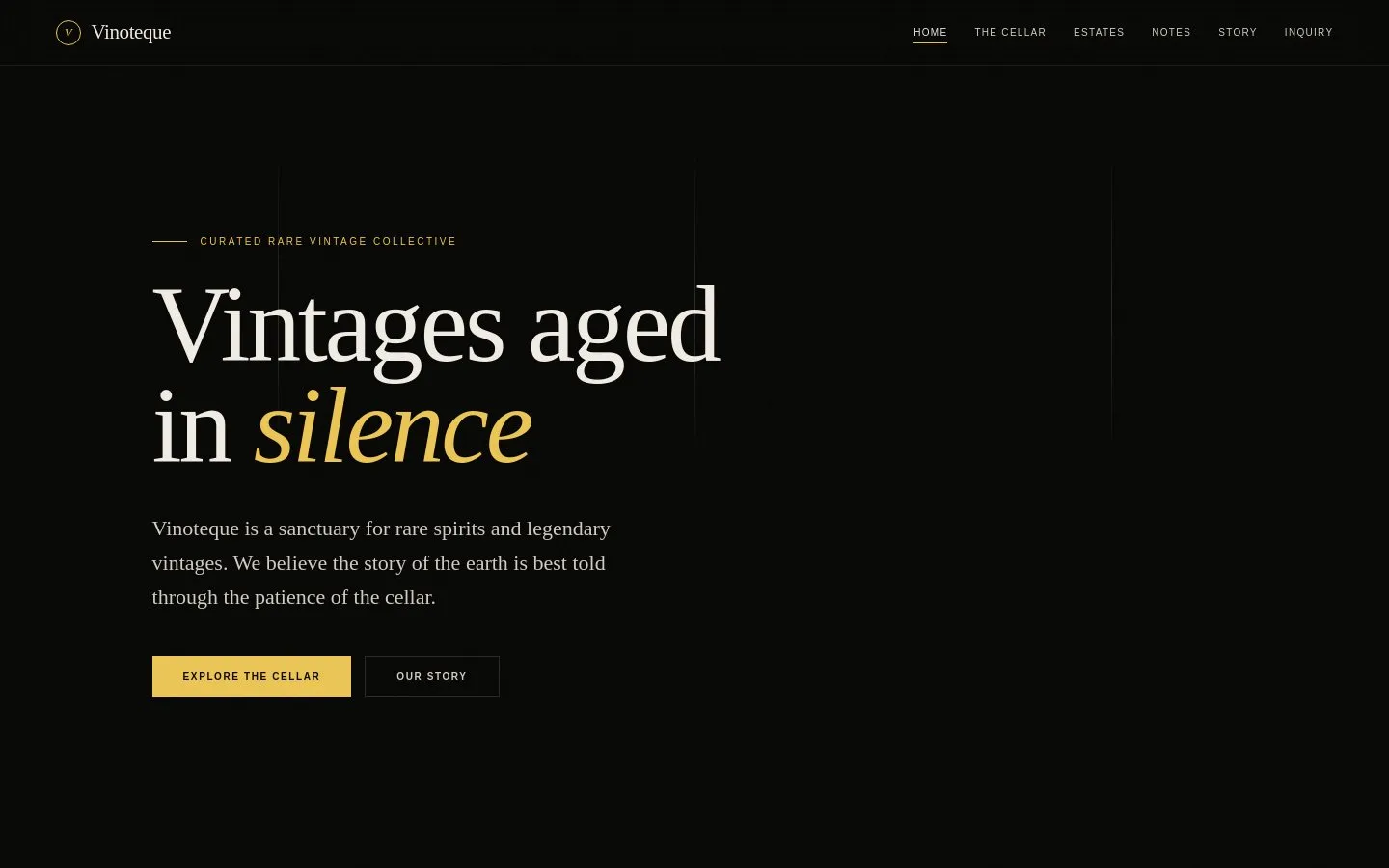
Click on the preview to open full live preview
The Problem
Vinoteque, a private collective of rare wine and spirits curators, had no digital presence to match the calibre of their cellar. Their archive — spanning First Growth Bordeaux, Grand Cru Burgundy, aged single malts, and artisanal agave spirits — existed only as personal knowledge shared over phone calls and in-person tastings. Prospective collectors had no way to explore the collection, read provenance histories, or understand the expertise behind the curation without scheduling a meeting.
Pain Points
The curators’ deep knowledge — bottle provenance, storage history, tasting context — was locked in conversations and handwritten notes, invisible to anyone outside their immediate network. Collectors couldn’t browse the archive on their own time or discover bottles they didn’t already know to ask about. There was no way to communicate the editorial voice that distinguished Vinoteque from auction houses and retail merchants. The journal writings that the curators produced on terroir, cellar craft, and maturation science had no home and no audience. Acquisition inquiries came through a generic email inbox with no structured intake, making it difficult to match collectors with the right bottles.
Our Approach
We designed a dark, editorial-driven digital archive that mirrors the reverence Vinoteque brings to the physical cellar. The homepage opens with a cinematic presentation of featured bottles, followed by a curator spotlight and recent cellar notes — establishing authority before the first click. The Cellar page presents the full collection as a filterable archive by type (First Growth Red, Single Malt Scotch, Grand Cru Pinot Noir, etc.), where each bottle unfolds into a detailed page with high-resolution photography, full provenance narrative, tasting and cellar notes, alcohol profile, and related selections from the same region. Curator profiles showcase each expert’s background, philosophy, and the bottles they’ve personally selected, lending human trust to every recommendation. A Cellar Notes journal houses long-form editorial pieces on topics like sediment physics, cask maturation science, and terroir analysis — content that positions Vinoteque as a knowledge authority, not just a dealer. The Acquisitions page provides a structured inquiry form for collectors to express interest in specific bottles or request curation guidance. Legal pages covering provenance dossier rights, library storage rights, and buy-back guarantees reinforce the seriousness of the operation. The entire experience uses a refined dark palette with gold accents, serif typography, and deliberate pacing that echoes the patience of the cellar itself.
Outcomes
Within two months, the curators reported that the nature of their conversations had fundamentally changed. Collectors arriving to tastings had already read provenance narratives and cellar notes, turning introductions into informed discussions about specific vintages. Acquisition inquiries through the structured form were better qualified — the curators estimated they spent 40% less time on initial back-and-forth because collectors were self-selecting based on the detailed bottle pages. The Cellar Notes journal became an unexpected driver of inbound interest: the piece on Margaux terroir was shared across three prominent wine forums, bringing in collectors who had never heard of Vinoteque. Two curators said the bottle detail pages had replaced the ad-hoc PDFs they used to prepare for client meetings. The founder’s summary: ‘The website finally speaks the way we speak about wine — with patience and precision.’