Nexus Conference
A comprehensive event platform for a multi-track tech conference
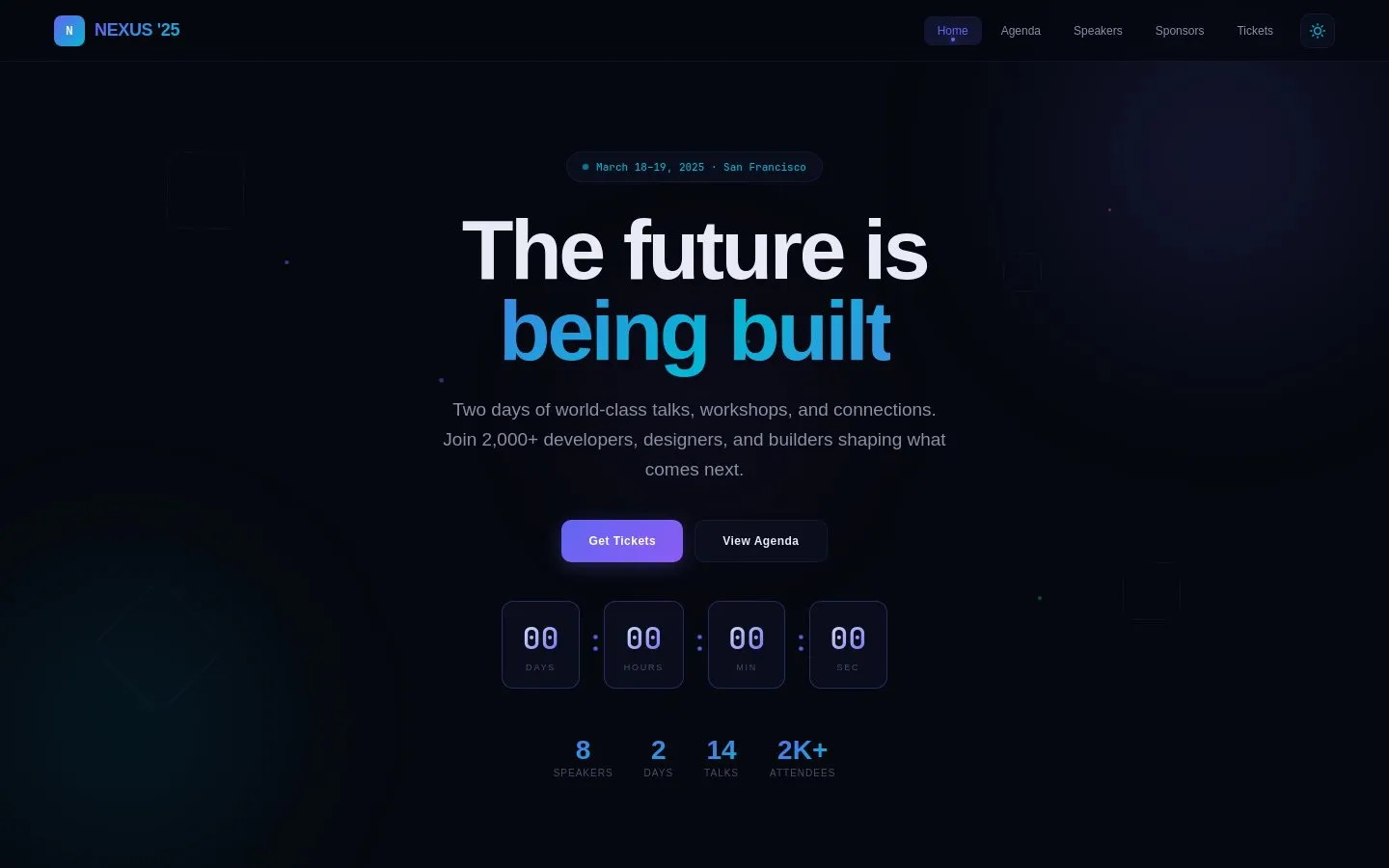
Click on the preview to open full live preview
The Problem
Nexus, a 1,500-person tech conference covering AI, infrastructure, security, design, and fintech, was using a combination of Eventbrite for registration and a static HTML page for information. Attendees couldn’t explore the multi-track schedule, speakers had no dedicated profiles, and sponsors had minimal visibility despite paying premium rates for brand placement.
Pain Points
The static page couldn’t represent the complexity of a 5-track, 2-day schedule — attendees had to download a PDF to see session times. Speaker information was a plain text list with no bios, talk descriptions, or social links. Sponsor logos were crammed into a footer grid with no hierarchy reflecting their tier investment. There was no way for attendees to build a personal schedule or set reminders. The disconnect between Eventbrite (registration) and the info site (content) created a disjointed experience.
Our Approach
We built a unified conference platform with an interactive multi-track schedule browser — attendees can filter by track, time slot, or speaker and build a personalized agenda. Each speaker has a rich profile page with bio, talk abstract, social links, and other sessions they’re involved in. Sponsor visibility is tiered: title sponsors get hero placement and dedicated sections, while supporting sponsors appear in contextually relevant positions throughout the site. The registration flow is integrated directly into the site, eliminating the redirect to a third-party platform.
Outcomes
Early-bird tickets sold out three weeks faster than the previous year, with attendees citing the detailed schedule and speaker profiles as what convinced them to commit. The schedule builder was used by 78% of registered attendees before the event — and the organizers noticed a measurable drop in ‘wrong room’ confusion on event day. Two title sponsors renewed at a higher tier, specifically referencing the dedicated brand placement as a factor. Post-event, the platform doubled as a session archive, and talk pages continued generating traffic for months — effectively turning a two-day event into year-round content.